From cluttered carts to lack of localization, these friction points quietly sabotage revenue. (Also: what high-performing teams do to fix them.)

Written by

Share this post
Subscribe for best practices on optimizing your software business.
Listen to this article
From cluttered carts to lack of localization, these friction points quietly sabotage revenue. (Also: what high-performing teams do to fix them.)
You’ve done the tricky part: building awareness, driving traffic, and convincing buyers they want your product. But for many software and SaaS companies, revenue quietly slips away at the last step.
Checkout is where intent turns into revenue. It’s also where far too many promising transactions go to die.
According to The Friction Report, 82% of software sellers are experiencing double-digit cart abandonment rates. At the same time, 53% of buyers admit to abandoning purchases due to unclear pricing, mistrust, or limited payment options.
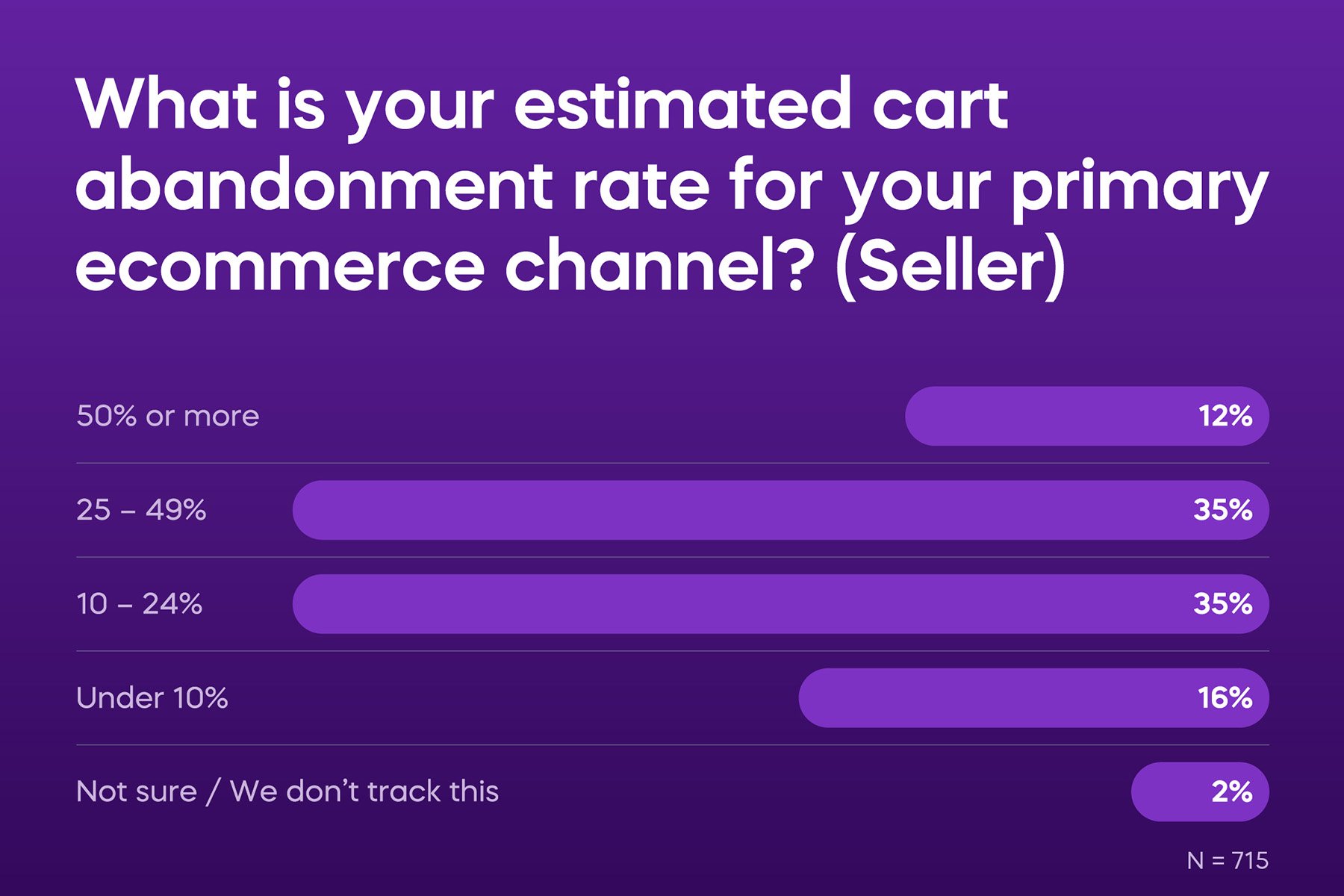
In this blog, we break down the top four conversion rate killers lurking in digital commerce checkouts — and what needs to change to protect revenue at the finish line.
Each issue stands on its own, but together they reveal bigger patterns; conversion rate killers aren’t just frustrating, they’re systemic, compounding, and easy to overlook.
Killer #1: Friction-filled checkout flows
Nothing kills buyer momentum faster than a checkout that feels harder than it should.
Long forms, unnecessary fields, forced account creation, and missing progress indicators all introduce hesitation at the exact moment buyers are ready to commit. Sellers often justify this friction as “necessary data collection,” but buyers see it as added effort — and effort kills conversion.
Our research shows a clear disconnect here. Sellers tend to underestimate how much complexity buyers will tolerate, while buyers consistently value checkout experiences that feel intuitive, clear, and easy to complete. According to Baymard Institute, forced account creation alone has caused 24% of US digital shoppers to abandon an order.
Why this happens
Many checkout flows are designed around internal processes rather than buyer intent. Data requirements grow over time, fields get added “just in case,” and optimization becomes incremental instead of intentional.
On mobile — where a growing share of B2B software journeys now begin — these issues are amplified due to UX constraints and higher input friction.
Why it costs you
Friction this late in the funnel creates disproportionate damage. Buyers who abandon at this stage don’t need more education or nurturing — they were already convinced. The loss is immediate and measurable.
How to fix it
- Reduce checkout steps and fields to what’s truly required (remove “nice-to-have" fields, combine steps when practical)
- Enable guest checkout whenever possible (avoid forced account creation, push account setup deeper into lifecycle)
- Use real-time validation to prevent frustrating errors (in-line error messages, clear formatting prompts)
Killer #2: Limited payment options by market
Payment choice can be a deal closer — or a deal breaker. It’s often the deciding factor in whether a transaction completes. (33% of buyers abandon checkout if their preferred payment method isn’t available.)
Buyers expect to pay using familiar, trusted methods, and those expectations vary significantly by region. Credit cards may dominate in one market, while digital wallets, bank debits, or invoicing are standard elsewhere.
.jpg?width=1800&height=1200&name=Preferred%20payment%20method%20(blog).jpg)
Why this happens
Many software companies default to card-first payment strategies, especially early on. Cards are easy to launch with and work well in domestic markets, but they don’t scale cleanly across regions.
According to one global study, local payment methods (e.g., PIX in Brazil, UPI in India) are projected to represent 58% of all digital commerce transactions by 2028, with card payments dipping by 20% in value and 30% in volume.
Why it costs you
Beyond sheer cart abandonment, when buyers don’t see a familiar payment option, confidence also drops — even if they ultimately choose to pay another way. In some markets, the absence of a local method is interpreted as a signal that the seller doesn’t truly serve that region.
How to fix it
- Offer regionally relevant payment methods (ACH in US, SEPA in the EU, Alipay in Asia)
- Prioritize local favorites (above the fold, pre-selected, clearly labeled)
- Review payment method performance by region (adoption, success rates, drop-off)
Killer #3: Surprise costs, taxes, and currency confusion
If there’s one thing buyers universally hate, it’s surprises — especially when money is involved.
Unexpected taxes, last-minute fees, or currency conversions that appear only at the final step instantly erode trust. In fact, buyers rank clear, transparent pricing as the single most important element of a good checkout experience.
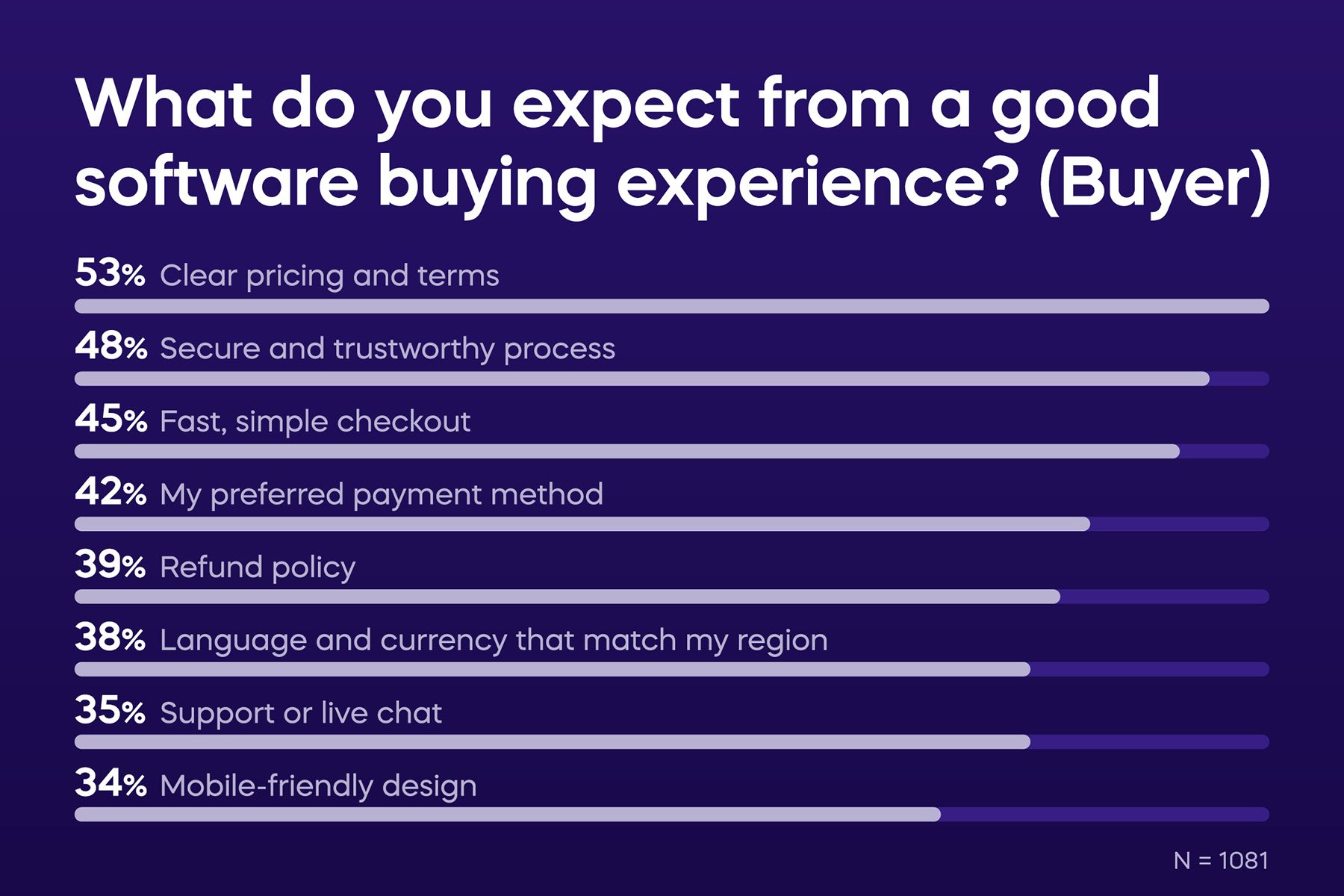
That priority gap is stark: while buyers consistently cite pricing clarity as a top expectation, sellers often underestimate how quickly hidden costs trigger abandonment.
Why this happens
- Prices are shown in one currency, but charged in another
- Taxes or VAT are calculated only after payment details are entered
- Fees are buried, not appearing until the final confirmation screen
Why is costs you
When buyers feel misled — even unintentionally — trust collapses. At that point, conversion optimization tactics don’t matter. The relationship may already be broken.
How to fix it
- Display total cost (including taxes and fees) upfront
- Calculate taxes based on buyer location, before payment
- Charge in the currency you display (so customers aren’t hit with surprise conversion fees)
Killer #4: Lack of true localization
Localization is more than translating text. In reality, it’s about aligning checkout experiences with local expectations and quirks.
That includes:
- Address formats
- Field order and labeling
- Regional norms around names, regions, and identifiers
- Familiar payment and billing conventions
Highly confident global sellers are significantly more likely to localize checkout experiences across all touchpoints — and they outperform peers as a result.
Why this happens
Localization is frequently treated as a compliance checkbox rather than a conversion strategy. Teams localize just enough to operate functionally and legally, but not enough to feel native to buyers.
Why it costs you
Even small mismatches can create hesitation. When checkout feels “foreign,” buyers slow down, second-guess, or abandon altogether.
How to fix it
- Dynamically adapt checkout flows by region (auto-adjust address fields, field order, and validation rules to match local formats)
- Localize beyond language and currency (translate key UI text, localize date/number formats, legal/tax phrasing, etc.)
- Localize post-purchase reassurance (locally expected refund/renewal language, support services)
How these conversion killers compound
Each of these issues can hurt conversion on its own. Together, they create a compounding friction effect.
Fixing one problem in isolation — a shorter form here, an extra payment method there — helps, but it rarely solves the root cause. Fragmented systems, manual workarounds, and disconnected ownership make it difficult to deliver a consistently frictionless checkout experience.
Research highlights this pattern clearly: companies with more integrated digital commerce foundations are far more confident in global expansion and conversion performance.
What high-performing teams do differently
Teams that consistently protect checkout conversion tend to share a few traits:
- They design checkout around buyer expectations, not internal constraints
- They invest in payment flexibility and localization early
- They prioritize pricing clarity as a trust mechanism
- They view checkout as a system, not a page
Rather than chasing one-off optimizations, they build foundations that scale. Here are some specific ways to instill change and keep momentum.
Run checkout audits on a regular cadence. Review flows end to end by region, device, and payment method — not just when conversion drops. (According to our research, many sellers underestimate where friction actually occurs.)
Test checkout UX continuously, not in isolation. Use multivariate testing for layouts, form length, payment ordering, and messaging to understand which combinations perform best.
Track the right KPIs (by market, not just globally). Checkout conversion rate, payment method adoption, authorization rates, drop-off by step, and error rates often tell very different stories region to region.
Choose tools and partners that support iteration. Global checkouts aren’t “set and forget”; performance depends on the ability to adapt as markets, buyer expectations, and payment behaviors change.
Bottom line
Checkout conversion isn’t won with hacks or isolated UX tweaks. It’s earned by removing friction across payments, pricing, localization, and flow — consistently, and at scale.
For teams selling software globally, that often means rethinking how checkout, payments, tax, and optimization work together.
Want to explore how an integrated approach can help eliminate checkout friction and protect conversion as you scale? Reach out to start a conversation.