Plan offers, checkout, and renewals around the way your buyers actually purchase.
Black Friday and Cyber Monday (BFCM) began as a consumer retail story, but has become increasingly relevant for B2B software companies. The timing aligns with budget deadlines, fiscal year-end, and renewal season, making it one of the year’s busiest buying windows.
Business buyers feel that timing. Teams with unspent budget want to commit before it resets, and a well-built offer gives procurement a reason to approve now instead of in Q1.
The retail side of the event keeps growing. US shoppers spent $44.2 billion online during Cyber Week 2025, up 7.7% year over year, according to Adobe, which projects $47.5 billion for the same five-day period in 2026.
Those are consumer figures, of course, and B2B software doesn't sell like headphones. Your buyers bring purchase orders, approval chains, renewal dates, and local tax requirements to every transaction.
The real challenge for SaaS leaders is how to build offers, checkout experiences, and follow-up that hold up under that complexity. Get those right, and a holiday spike turns into recurring revenue.
The short version: launch offers in early November and keep them open into December. Structure discounts around renewals, upgrades, and expansions rather than list price. Make sure your checkout handles local payment methods, taxes, and invoices under peak load. Decide which purchases go self-serve and which need a rep or partner. And plan the post-purchase follow-up before the sale ends.
When does BFCM 2026 start, and how is it different for B2B software?Black Friday falls on November 27, 2026, and Cyber Monday on November 30. The five-day US shopping period from Thanksgiving, November 26, through Cyber Monday is commonly called Cyber Week. Your promotion may run for a different period (many sellers run offers across the whole month), so publish its exact start and end dates.
It's a global event, too. Black Friday promotions have spread well beyond the US, with China's Singles Day on November 11 opening the season even earlier.
For B2B software, three things set the event apart from consumer retail:
-
Procurement. Business buyers often need a quote, a purchase order, or a second approver before they can accept an offer, so a five-day window can be too short.
-
Recurring revenue. A holiday deal sets the customer's starting price, renewal expectations, and upgrade path for years.
-
Global compliance. Every discounted order still carries local currency, tax, and invoicing requirements in the buyer's market.
When should B2B SaaS companies launch holiday promotions? Earlier than Black Friday, and longer than Cyber Monday. Buyers have moved their spending toward the front of the event: Black Friday's sales growth outpaced Cyber Monday's for the second consecutive season in 2025, as shoppers acted on early deals.
B2B buying cycles add a second reason to start early. Many buyers spend November confirming what budget remains before year-end, and the offers they see first are the ones they bring to finance. Timing still varies by buyer: an existing customer adding seats can act quickly, while a new enterprise buyer with a security review may need weeks.
The back end matters as much as the start. A deal that needs a purchase order may not clear in five days, so decide in advance whether quotes issued before the offer expires can still be accepted in December, and who can approve exceptions.
Best practices:
- Early-access offers for existing customers in the first two weeks of November
- Promotion dates mapped to your buyers' fiscal year-end as well as the retail calendar
- A documented quote-validity and approval policy for purchases already in motion
- One promotion calendar shared with sales, partners, and support
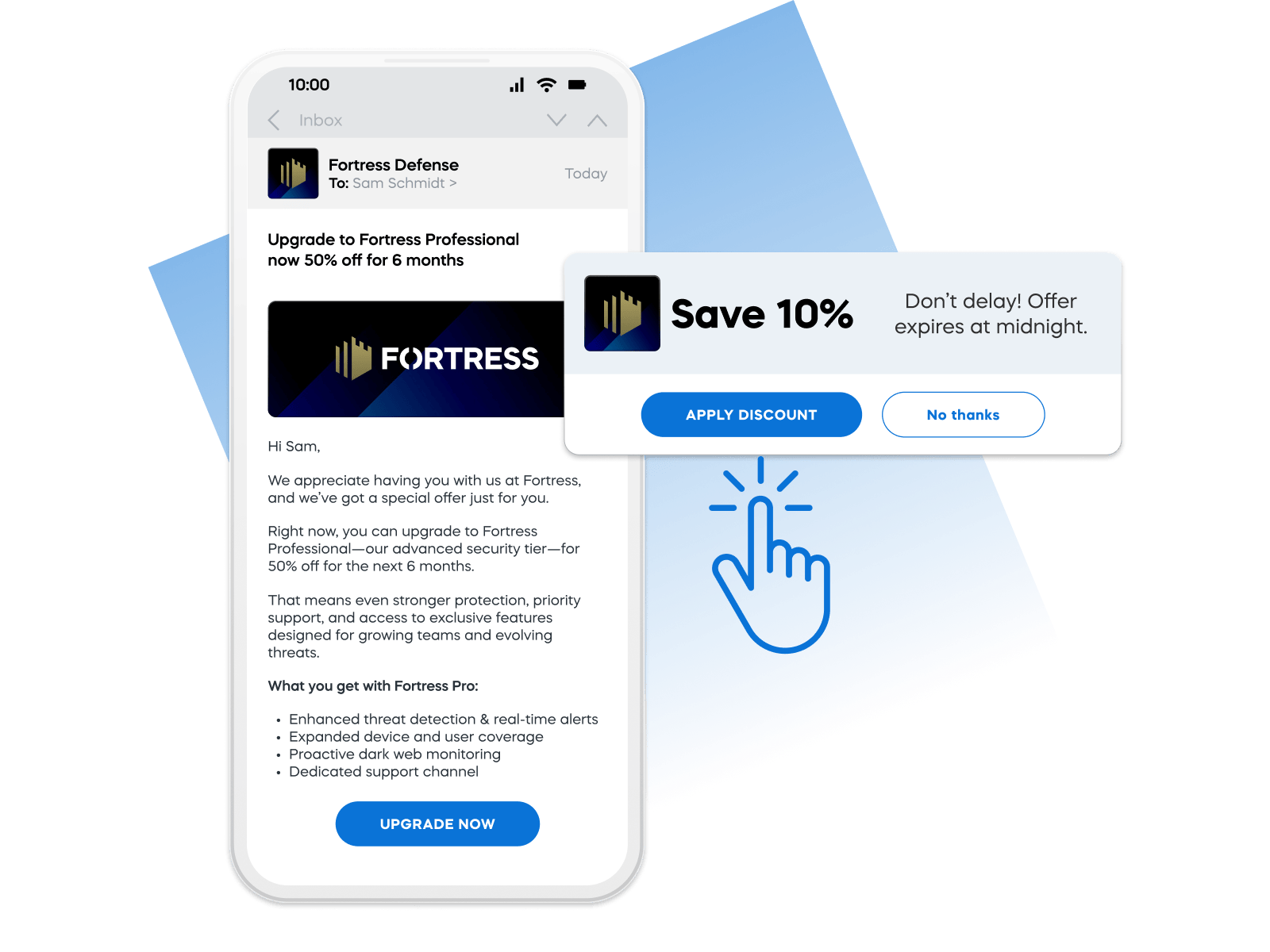
What offers should B2B SaaS companies run for BFCM? Start with the customers you already have. Renewals and expansions rarely get treated as holiday offers, but a time-limited version gives existing customers a reason to act during the BFCM window, often with less selling than a new-customer deal.
Tie the discount to something that grows the account, such as a longer term, a higher tier, or more seats. A straight percentage off list price creates urgency, but it also resets what customers expect to pay and attracts buyers who leave when the price returns.
B2B buyers weigh offers differently than consumers do. They want to know whether the deal lowers their cost of ownership or adds capability they'll use next year, and whether they can defend it to finance.
Run the numbers on your side, too. An early renewal can pull cash forward without adding recurring revenue, and extra months, seats, or credits carry a real cost even when list price doesn’t change. Factor in payment fees and partner commissions before you set a ceiling.
Offer structures worth considering:
- Renewal incentives, such as "12+1" months for renewing early
- Multi-year renewals at a locked-in rate
- Renewals bundled with an expansion, like added seats or a higher tier
- Limited-time upgrades and add-ons, like storage, usage credits, or premium features
- Annual or multi-year prepay offers for customers on monthly plans
- Regional pricing in markets you want to grow
Be explicit about what happens at renewal. If the discount covers the first term only, say so on the offer page and in the confirmation email. A surprise at renewal creates the churn the offer was meant to prevent.
Best practices:
- A discount ceiling based on the price you need at renewal
- Separate offers for new and existing customers
- Renewal terms visible at the point of purchase
- Discount codes that expire on schedule
A holiday discount only pays off if those customers stay and grow. This guide to retention marketing covers the renewal, upsell, and win-back tactics that carry them past the first term.
How can partners and affiliates extend your BFCM reach?Partners reach buyers your own campaigns don't, and during the holidays that reach shows up in revenue. On Cyber Monday 2025, affiliates and partners (a category that includes influencers) drove 21.8% of US online retail revenue, a share that grew 7.4% year over year.
That’s retail data, but B2B software brands can experience a similar holiday lift. Resellers, affiliates, and referral partners already have the trust of buyers deciding where to spend year-end budget. One of our B2B clients earned about 8% of its annual affiliate revenue from Black Friday through Cyber Monday 2025, due largely to more sales at a lower average order value, a sign buyers were acting on holiday offers.
Increasingly, influencers also play a role in that mix. Creators are paid mainly for their content and reach rather than per sale, so they do their best work early, shaping how buyers think about your product before the holiday offer goes live. Pair them with affiliate codes, and you can track the purchases they refer.
The more partners you add, however, the more your offer strategy has to hold together. Partners promote the offers you give them, so consistency starts with you. If a reseller gets one version of the deal, an affiliate another, and your site shows a third, buyers stall or wait for the best price to surface.
Holiday pricing mismatches are a small-scale version of a bigger issue: channel conflict, which partner-led companies have to manage as more renewals and long-tail purchases move to digital buying paths.
Best practices:
- Top partners identified and briefed at least three weeks before launch
- Partner assets (copy, banners, and offer terms) delivered with the brief
- A unique code for each partner, so you can attribute results
- One approved offer across every channel (with differences spelled out)
- Referral rewards that turn current customers into a channel
How do you keep checkout from losing BFCM deals?Checkout is where a holiday campaign pays off or leaks. Traffic surges, buyers arrive with a specific offer in mind, and any friction gives them a reason to wait or go elsewhere.
Price surprises carry the most risk. In our 2025 Friction Report, a survey including 1,081 software buyers, 48% named unexpected taxes or fees as a reason they abandon checkout, which was the most common response.
Holiday discounts sharpen that problem. A buyer who sees 30% off and then meets VAT or sales tax on the final screen feels misled, even when the math is correct.
B2B buyers bring their own requirements. Some need a formal quote or purchase order before they can buy, others pay by invoice, and most expect their local currency and payment method.
Best practices:
- Tax-inclusive or clearly estimated pricing before the final step
- Local currencies, languages, and payment methods in every market you sell into
- Quote, purchase order, and invoice options for buyers who can't pay by card
- Payment retries and routing that recover failed transactions under peak load
- Load and checkout testing completed before the promotion launches
- A mobile-friendly flow, tested on devices your customers actually buy on
Which BFCM purchases should go through a rep or partner, and which should be self-serve?Route by complexity, not by transaction type. Routine purchases (standard terms, no negotiation) can go self-serve, whether it’s a new customer buying a standard plan, an existing customer adding seats, or a renewal on unchanged terms. Custom pricing, co-terming, multi-year agreements with non-standard terms, and security reviews still need a rep or partner.
Renewals deserve extra attention in this window. Our 2026 Cost of Selling Software report found that renewals make up 42% of software sellers' transaction volume and 42% of their revenue, more than any other transaction type. For sales-led companies, that volume carries a real cost to serve when reps handle it by hand.
Sending routine purchases to self-serve frees reps and partners for the complex deals that need them in November. It also lets buyers accept a holiday offer on their own schedule, without waiting on a quote.
For renewals in particular, renewal automation makes that practical. Basic auto-renewal simply continues the existing contract, while a strategic renewal automation program can put the offer in front of the customer and adjust terms at renewal.
Just remember: keep people in reach. A clear route to a rep or partner gives buyers confidence, even on purchases they could complete on their own.
Best practices:
- Holiday offers available at checkout, in customer accounts, and in the renewal flow — not only by email request
- Clear eligibility rules, so buyers know which plans and terms qualify
- Standard terms that let routine purchases (e.g., renewals and seat additions) go through without a rep’s approval
- A visible option to talk to sales or a partner for anything non-standard
- Reporting that separates self-serve purchases from rep- and partner-led ones
How are AI shopping assistants changing BFCM discovery?More buyers now start research by asking an AI assistant, and that changes what your offer pages need to say. On Cyber Monday 2025, traffic from generative AI tools to US retail sites rose 670% year over year, yet AI-assisted shoppers are still a small slice of the market. That slice is growing fast: AI traffic is projected to more than double over the 2026 holiday season, up 130% year over year.
Software buyers use the same tools to compare vendors, pricing, and terms as the broader market. If an assistant can't find your offer details, it can't recommend your offer.
AI assistants pull from text they can read and attribute. A promotion that lives only in a banner image, or a pricing page that hides terms behind a form, gives them little to cite. The stakes rise as assistants move from answering buyers’ questions to acting on them, with AI agents starting to complete purchases without a buyer ever visiting your site.
Best practices:
- Offer details (price, dates, eligibility, and renewal terms) written as plain text on a dedicated page
- A short FAQ on that page covering common pricing and terms questions
- Matching offer details across your site, partner pages, and marketplace listings (with differences spelled out)
- Live chat or fast support on pricing pages for questions an assistant can't answer
What should you do after Cyber Week to keep holiday buyers?Plan the follow-up before the sale starts. Discount-driven buyers can carry higher churn risk, so the return on BFCM shows up months later, at the first renewal.
The first 30 days set the tone. A buyer who onboards quickly and sees value early is in a far better position to renew at full price than one who bought on impulse and never logged in.
Best practices:
- Onboarding sequences that start the day of purchase
- Usage-based nurture (tutorials, playbooks, and webinars) for new holiday customers
- Renewal price reminders well before the first renewal date
- Card updater and payment retry coverage for annual renewals that land next November
- A tagged BFCM cohort, so you can compare first-renewal and churn rates against your baseline
- Expansion offers timed to Q1 usage milestones
Bottom lineBFCM rewards software companies that plan for its B2B realities. The retail calendar sets the timing, but your buyers' budgets, approval chains, and renewal dates decide what converts.
The strongest holiday programs start early, price offers around account growth, keep partners in sync, and give buyers a checkout and renewal path that works without a rep for routine purchases. Then they measure the holiday cohort at first renewal, because that's where the season's real return appears.
FAQsWhat's the difference between Cyber Week and Cyber Weekend?
Cyber Week usually means the five days from Thanksgiving through Cyber Monday. Cyber Weekend is shorter, covering Black Friday through Cyber Monday. Some sellers stretch "Cyber Week" to the full week after Thanksgiving, so state your exact offer dates rather than relying on the label.
Should SaaS companies discount monthly or annual plans for Black Friday?
Annual plans usually hold up better. A discount on a monthly plan can bring in buyers who cancel once the promotional price ends. Offering a holiday price for switching from monthly to annual locks in a full year of revenue and gives the customer time to see value before renewal.
How much should a B2B SaaS company discount for Black Friday?
There’s no standard figure. Work backward from the price you need at renewal and set a discount ceiling before the season. Many teams get better results from a smaller discount paired with added value, like extra seats or months, than from a deep cut to list price. A “12+1” offer, for example, works out to about 7.7% off the average monthly price.
How is sales tax or VAT handled on a discounted subscription?
In most markets, tax is calculated on the price the customer actually pays, so a discount lowers the tax amount too. Rules vary by country and state, and the renewal at full price is taxed at the full amount. If you sell through a merchant of record, it calculates, collects, and remits that tax for you.
How do you measure whether BFCM worked for a software business?
Look past holiday revenue. Track new annual recurring revenue from the holiday cohort, the total cost of the discounts you gave, payment success rates during the event, and the cohort's first-renewal and expansion rates compared with your baseline.
Account for renewals you pulled forward and purchases customers were already planning to make. A season that wins on revenue but loses at renewal didn't pay off.